

When preparing for a TISAX audit, many organizations focus heavily on policies and documentation.
Yet in practice, the most critical findings are rarely about missing documents – they are about gaps between intention and reality.
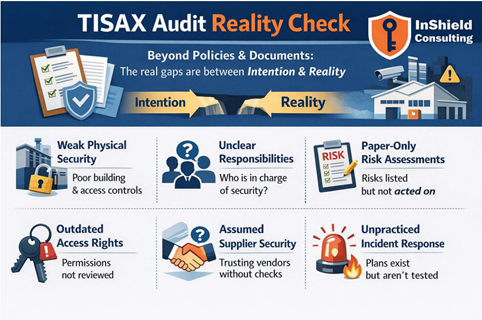
Across many audits in the automotive supply chain, the same patterns appear again and again:
– insufficient physical security (buildings, access zones, separation of areas)
– unclear responsibilities for information security
– risk assessments that exist on paper but not in decision-making
– access rights that are not consistently reviewed
– supplier security that is assumed, not verified
– and incident handling that is defined, but not practiced
These findings are not about complexity. They are about structure, ownership, and consistency.
Addressing them early makes audits more predictable – and organizations more resilient.